Take family time outside the usual routine
Outdoor meals shouldn't feel like an endurance test. We share tested ideas for multi-age games, mess-free field menus, and realistic schedules that bend when toddlers tire or weather shifts.
Make space for everyone — introduction
A family outing succeeds or founders on whether people feel boxed in. When you bring three-year-olds, tweens, and grandparents to the park, expectations rarely match on arrival. One wants to climb every fence post; another wants uninterrupted quiet with a paperback book; another needs level ground and an easy perch away from stinging nettles.
Instead of forcing a single uniform activity, a durable picnic establishes zones: a central anchor rug where bags live and water stays cold, an open perimeter for active throwing, and a shaded quiet fringe for drawing or rest. You do not need pristine parklands or remote wilderness. A local public meadow like London's Regent's Park, Melbourne's Royal Park, or a municipal green along a river bank has everything required.
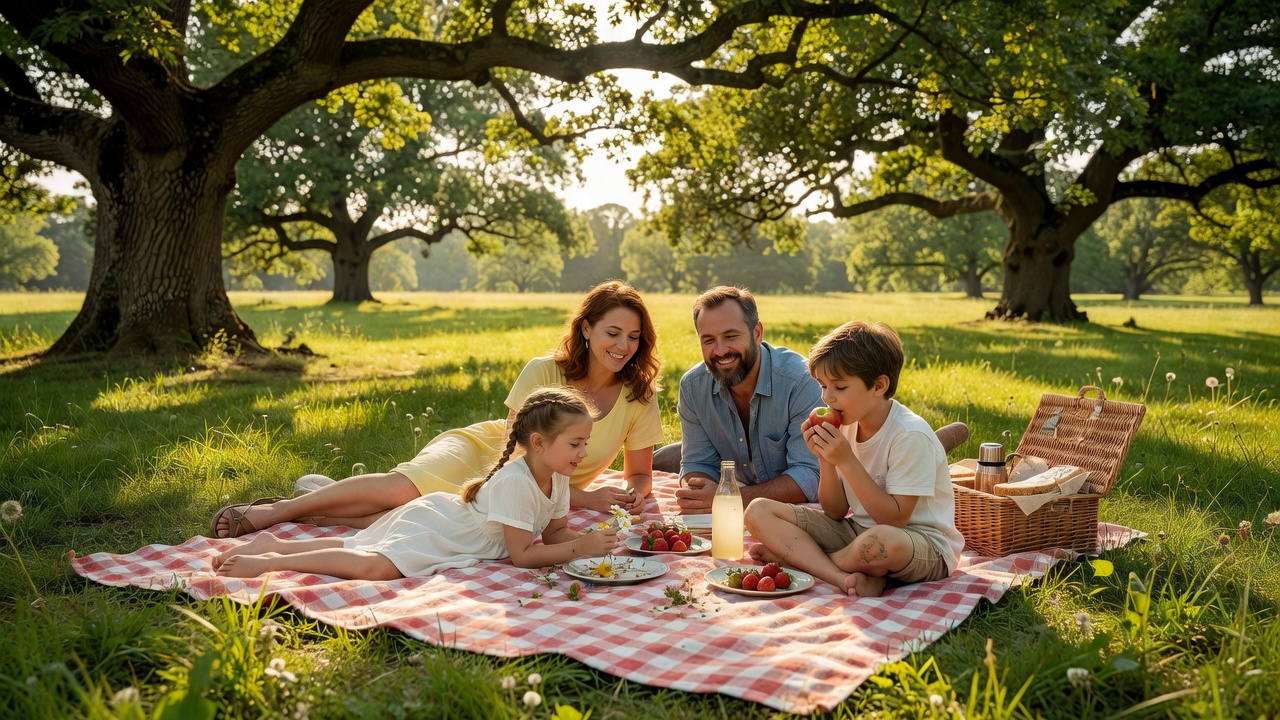
Setting your base near dappled shade gives smaller children shelter without cutting them off from group play.
Play before the plates — outdoor games
Unpacking food the instant you lay the rug down is the most common tactical mistake. Children arrive with pent-up car energy; handing them a delicate wrap immediately guarantees squashed sandwiches, sandy strawberries, and restless fidgeting. Burn off initial steam first with open-ground play.
Cone Boundary Shadow Tag
Use sweaters or tree shadows as moving boundaries. Players cannot run on grass directly touched by overhead sun. It teaches spatial awareness, slows down sprinting speeds to level the playing field between six-year-olds and teenagers, and burns intense energy in ten minutes.
Kubb & Swedish Lawn Pins
Tossing hardwood batons at field blocks introduces hand-eye coordination without punishing misses. It gives grandparents and youngsters a shared pace, allowing comfortable standing or sitting between turns.
Bandana Disc Golf
Tie three bandanas to low tree branches or park benches at varied distances. Players throw lightweight flying discs attempting to tap each fabric marker with the fewest tosses. Zero setup destruction, zero turf scuffing.
A little making, a little exploring — creative activities
Once initial sprint adrenaline subsides, bodies want to settle, but minds still seek stimulation. Handing out smartphones at this juncture breaks the rhythm of being outside. Instead, provide portable tactile prompts that connect to the surroundings.
"Children don't need elaborate science kits in the woods. Two pocket magnifying loupes and a sheet of stiff paper turn an ordinary tree stump into an entire archipelago of moss and bark."
— Field Notes from the Polarpicniccleverp Family ResourceSimple nature rubbings using ordinary unwrapped wax crayons and sturdy drawing paper capture leaf textures and brickwork. Sound mapping asks children to sit quietly for four minutes with their eyes shut, marking symbols on paper whenever they hear a dog bark, an overhead airplane, rustling birch leaves, or running river water.
Feed the group simply — recipes
The enemy of outdoor family dining is sogginess, runaway sauces, and ingredients that turn greasy in mild sunshine. Leave elaborate mayonnaise salads and fragile pastries at home. High-reward picnic food is compact, durable, and easily partitioned into clean portions with zero cutlery.
Pressed Rosemary Focaccia Loaf
Layered with smoked provolone, marinated artichoke hearts, roasted peppers, and peppery rocket. Wrapped tight in greaseproof paper and chilled with a weight on top, it slices cleanly into neat bite-sized squares without dropping fillings.
Cold Sesame Noodle Bento Tubs
Buckwheat soba tossed with toasted sesame oil, tamari, shredded crisp carrots, cucumber ribbons, and edamame. Packs into reusable stainless containers without separating or needing ice packs to stay fresh.
Seeded Oat Flapjacks with Dried Cherries
Sweetened with maple syrup and dense with pumpkin seeds and rolled oats. Survives bumpy backpack rides, heat, and drops without crumbling into dust.
Give the day a gentle shape — family picnic planning
A successful afternoon has a loose, breathable cadence rather than an inflexible military timetable. Plan three hours total: thirty minutes to arrive and stake out space, forty minutes of vigorous movement, twenty minutes of lunch, thirty minutes of quiet tinkering or resting, and a final quick cleanup sprint before meltdowns take hold.
Learn the exact gear checklist that avoids overpacking while ensuring basic comforts: damp flannel wipes in an airtight pouch, a lightweight tarp backing under your wool blanket, and a separate rubbish tote so you never scramble for bins.
When plans wobble — practical adaptations and FAQ links
Even the finest picnic experiences sudden rain squalls, wasp swarms, grazed knees, or sibling disputes over who sits on which corner of the rug. Keeping your reaction calm and having pre-baked fallback options keeps a minor hiccup from ruining the entire outing.
If wasps find your fruit, shift the food containers five meters away behind a tree trunk instead of swatting wildly. If clouds burst overhead, transition games to an open pavilion or fold the day into an impromptu covered car tailgate gathering without treating it like a failure.
Have specific age questions?
Read our answers to common dilemmas including managing toddler naptimes outdoors, picky eater refusal, and keeping tweens engaged without eye-rolling.
Visit the Family FAQ