Set up a kinder outing
Most picnic stress happens before anyone leaves the front door. We replace cumbersome wicker hampers and over-scheduled checklists with a lean, forgiving system designed around human energy spans.
The Anatomy of a Low-Friction Picnic Spot
Not every picturesque patch of grass makes a sensible base. When choosing where to lay your ground blanket, prioritize three non-negotiables over scenic isolation: clean toilet facilities within a three-minute walking radius, natural shade that moves gently across the afternoon, and a buffer of at least twenty yards from busy bike paths or deep retention ponds.
In historic urban parks like Prospect Park in New York, Hampstead Heath in London, or Kings Park in Perth, perimeter meadows adjacent to tree lines provide the ideal sweet spot. The canopy shields toddlers and seniors from midday UV rays while leaving wide open turf ahead for flying discs and ball runs.
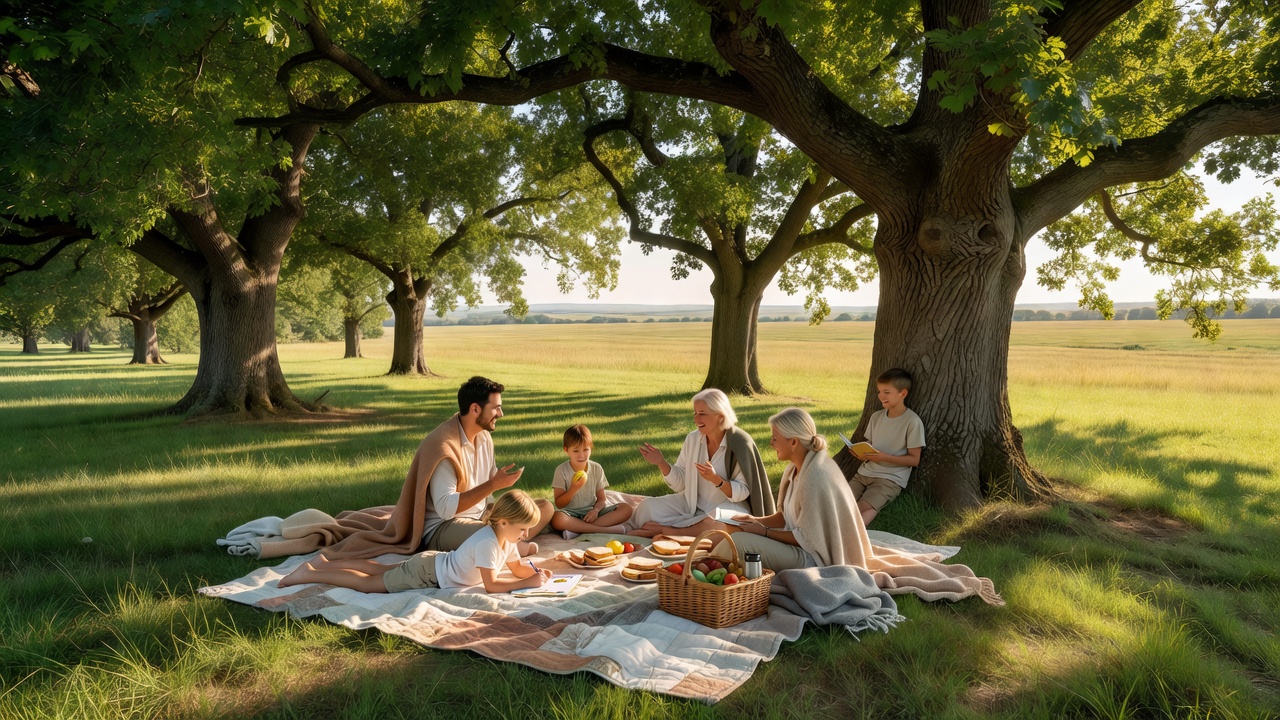
Choosing a spot along a tree line grants natural shade while keeping clear lines of sight across open play lawns.
The Multi-Age Zone System
The cardinal error of family outings is treating a four-meter blanket as a communal holding pen. When ten people of varying ages sit hip-to-hip, elbows knock cups, knees get bumped, and tension climbs quickly. Split your site into three loose functional sectors:
Zone A: The Ground Zero Rug
The anchor blanket where packs rest, drinks are kept upright in a firm crate, and toddlers have clean, barefoot space. Put waterproof tarp or a vinyl-backed ground sheet beneath your fabric blanket to prevent earth dampness from seeping upward.
Zone B: The Perch Perimeter
Two lightweight folding camp chairs or log seats positioned five feet off the rug. These are crucial for grandparents who cannot easily rise from turf, as well as nursing parents or adults who want relaxed conversation without crouched posture.
Zone C: The Launch Meadow
The open grass directly visible from your base. Keep this area free of bags, glass bottles, and sharp pegs so runners, throwers, and cartwheelers can move with full velocity.
Packing Realism: The 6 Essential Kits
Rather than dumping items randomly into giant tote bags where wet wipes sink to the bottom, divide supplies into distinct, modular sacks:
| Kit Name | Container | Mandatory Contents |
|---|---|---|
| Hygiene & Clean Up | Zip pouch (waterproof) | Damp washcloths in ziplock, hand sanitizer, small soap bar, 2 heavy refuse bags. |
| Hydration Station | Insulated tote | Large thermal stainless jug of tap water, labeled reusable cups, metal straw for toddlers. |
| Comfort Support | Drawstring bag | Mineral sunscreen, insect balm, broad-brim hats, basic adhesive bandages, antihistamine. |
| Meal Provisions | Hard cooler or crate | Pre-sliced pressed focaccia, bento noodle jars, seeded flapjacks, beeswax wraps. |
| Tactile Play | Mesh tote | Bocce balls or Kubb batons, 2 bandanas, crayons, scrap paper, pocket magnifying glass. |
| Rest & Transition | Shoulder roll | Fleece throw for chilly shade, spare clean socks and undergarments for young children. |
"The best outing ends when children are still laughing, not when they are dissolved in exhaustion. Leave twenty minutes before you think you need to."
— Polarpicniccleverp Field Rule #1The Realistic Timeline (3-Hour Window)
Expectations must match natural physical endurance. An endless six-hour park marathon usually culminates in tears, sunburn, and fraying patience. Stick to an unhurried three-hour window:
- 00:00 – 00:25: Arrival & Exploration. Stake base camp, walk the perimeter boundaries with children, point out physical landmark limits ("stay this side of the weeping willow").
- 00:25 – 01:05: Energetic Group Games. Tag, frisbee throws, pin bowling while hunger is mild and movement appetite is high.
- 01:05 – 01:40: Hand Washing & Food. Sit on the main rug. Simple finger foods, plenty of cold water, relaxed snacking.
- 01:40 – 02:25: Low-Stimulation Creative Drift. Drawing, nature collecting, leaf rubbings, casual conversation, book reading.
- 02:25 – 02:45: The 5-Minute "Leave No Trace" Game & Departure. Turn rubbish gathering into a speed sprint. Pack while energy reserves remain.